What to Do in Franschhoek and Whether the Valley Justifies the Cost
Decide if Franschhoek is worth the premium with a guide to the Wine Tram routes, the main road galleries, the Huguenot Memorial and how it compares to Stellenbosch.
What to Do in Franschhoek and Whether the Valley Justifies the Cost
The common assumption is that Franschhoek exists only for the Wine Tram. That is wrong. The Wine Tram is the headline, but the valley holds its value through a walkable high street, a genuine historical museum, and tasting rooms within a 10-minute stroll from the town centre. The question is whether that package is worth 30 to 50 percent more than Stellenbosch for the same meal and bed.
For restaurant goers and couples who book ahead, yes. For anyone looking to taste six properties in a day on a budget, no. Here is the breakdown.
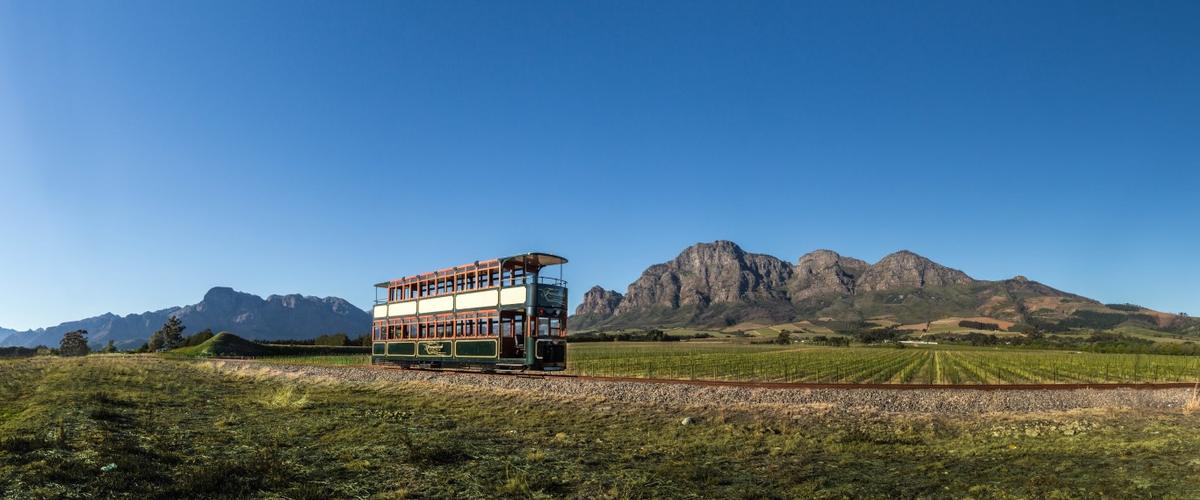

The Wine Tram: Eight Lines and Which Estates Each Serves
The Franschhoek Wine Tram (FWT) operates eight colour-coded lines in 2026: Blue, Green, Orange, Pink, Purple, Red, Turquoise, and Yellow. Each line serves a different set of properties. Tickets cost R360 per adult for 2026 and cover transport only. Tastings run R80 to R200 per estate, paid separately.
Blue, Pink, And Yellow: The Core Loop
The Blue Line hits Grande Provence, Leopard's Leap, Mont Rochelle, Holden Manz, Rickety Bridge, and Franschhoek Cellar. The Pink Line overlaps heavily: La Bri, Holden Manz, Grande Provence, Rickety Bridge, and Leopard's Leap. The Yellow Line covers Dieu Donné, Chamonix, Haute Cabrière, and Mont Rochelle. Blue and Pink sell out fastest on Saturdays. Book weekend slots four to six weeks ahead between December and March. Off peak, three to seven days is enough.
Green And Turquoise: The Long Haul Lines
The Green Line takes you to Boschendal, Plaisir de Merle, Vrede en Lust, Noble Hill, and Babylonstoren via transfer. The Turquoise Line hits the same set in reverse order. These farms sit 10 to 35 kilometres from town. Budget at least 45 minutes of travel time per transfer. If you want Babylonstoren, pick Green or Turquoise; no other line reaches it.
Orange, Purple, And Red: The Town Adjacent Options
Orange serves Haute Cabrière, Chamonix, Dieu Donné, and Franschhoek Cellar. Purple runs to Eikehof, Le Lude, La Bourgogne, La Motte, and Anthonij Rupert Wyne. Red covers Maison, Eikehof, Le Lude, La Bourgogne, La Motte, and Anthonij Rupert Wyne. Several stops on Purple and Red sit within walking distance of the town centre, which makes those lines less useful if you are willing to walk 15 minutes.
The failure case: you arrive without a booking at 10:00 on a Saturday in January. You will not get on any line. Pink and Blue are gone. Your backup is picking one of the walkable properties directly. Mont Rochelle, La Bourgogne, Le Lude, Eikehof, Maison, Dieu Donné, Chamonix, and Haute Cabrière are all under two kilometres from Huguenot Road. No tram needed.
The High Street, Museum, and Price Level
Huguenot Road runs straight through Franschhoek. It holds over 12 commercial art galleries. Ebony/Curated at number 67 focuses on contemporary African art. IS Art at number 42 sells work by living South African artists. David Walters Ceramics at number 52 is a working studio and showroom. You can cover the entire stretch on foot in 40 minutes, stopping at four or five galleries. Side roads off Huguenot are well lit and patrolled. Vineyard paths are not. Walking between properties after dark is not advised.
The Huguenot Memorial Museum sits on Lambrechts Road, near the monument designed by J.C. Jongens and completed in 1948. Entry costs R30 for adults and R10 for children for 2026. The museum explains why the French Protestant settlers arrived in 1688 and why farm names such as La Motte, Cabrière, and Dieu Donné appear on every map. The visit takes 45 minutes. If you skip it, you lose the only historical context that makes the valley different from any other wine region in the Western Cape.
What You Will Pay
Dining costs more here than in Stellenbosch. A main course at a top-end Franschhoek restaurant runs R180 to R450 for 2026. The equivalent in Stellenbosch costs R130 to R320. Tasting fees average R120 here versus R80 in Stellenbosch. A four-star double room in Franschhoek costs R3,500 to R7,000 a night. In Stellenbosch, the same tier runs R2,200 to R4,500. The premium across all categories is 30 to 50 percent.
| Category | Franschhoek (ZAR) | Stellenbosch (ZAR) | Premium |
|---|---|---|---|
| Main course, top end restaurant | 180 - 450 | 130 - 320 | 30 - 40% |
| Average tasting fee | 120 | 80 | 50% |
| 4-star double room per night | 3,500 - 7,000 | 2,200 - 4,500 | 35 - 55% |


Day Trip or Overnight? How it Compares for You
If you are a solo traveller or a group that wants to hit four farms and skip lunch, Franschhoek works as a day trip from Cape Town. Drive time is 45 minutes from the city centre. Arrive by 09:00, walk two or three of the town-adjacent properties, eat a quick lunch on Huguenot Road, and leave by 16:00. You avoid the accommodation premium entirely.
If you are a couple celebrating something, stay overnight. The high street is at its best between 17:00 and 20:00, when the day trippers have left and the galleries close. The tuk-tuk service costs R25 to R60 per person per trip within town for 2026, which solves the problem of walking after dark. Uber is unreliable here. Wait times run 20 to 40 minutes, and the service often stops accepting pickups from farms after 18:00. Pre-book Franschhoek Taxis on +27 82 256 4015 if you need a late ride.
Families And Budget Travellers
Families with children under 18: the Wine Tram charges the same adult price for minors. No alcohol is served on the tram. The museum is cheap at R10 per child, and the walkable farms mean you are not stuck on a bus for 40 minutes with bored kids. Skip the Green and Turquoise lines if the children are under 10. The transfer to Babylonstoren is 35 kilometres each way.
Stellenbosch beats Franschhoek for anyone on a strict budget, anyone who wants to taste more than six properties in one day (the town has over 20 tasting rooms along its main routes), and anyone who needs reliable Uber or late-night restaurant options. Franschhoek beats Stellenbosch for couples who want a compact, walkable, curated weekend and are willing to pay for it.
Common Questions
Can I do the Wine Tram without a car?
Yes. The tram departs from the Franschhoek Terminal at 32 Huguenot Road. You can walk to the terminal from most town centre accommodation in under 15 minutes. If you miss the last return at 17:00 to 17:30, you will need to call Franschhoek Taxis or walk.
Which Wine Tram line is best for a first timer?
The Yellow Line. It visits Dieu Donné, Chamonix, Haute Cabrière, and Mont Rochelle, four farms all within walking distance of town, which means you can hop off and walk back if the tram is full. Tastings at these properties average R120 each for 2026.
Is the Huguenot Memorial Museum worth R30?
Yes, but only if you care why the valley has French names. The museum explains the 1688 arrival and the farm name legacy. You can see it in 45 minutes. If you just want wine and views, skip it and spend the R30 on a tasting.
What do I do if all Wine Tram tickets are sold out?
Walk. Eight farms are within two kilometres of the town centre: Mont Rochelle, La Bourgogne, Le Lude, Eikehof, Maison, Dieu Donné, Chamonix, and Haute Cabrière. Huguenot Road is well lit and safe. You lose nothing except the double-decker tram experience.
Read next
-
 Franschhoek Restaurants Worth Booking and the Casual Spots Locals Keep Quiet
From months-ahead tasting menus to same-day farm stall picnics, here is how to eat brilliantly in Franschhoek without overdosing on white tablecloths.
Franschhoek Restaurants Worth Booking and the Casual Spots Locals Keep Quiet
From months-ahead tasting menus to same-day farm stall picnics, here is how to eat brilliantly in Franschhoek without overdosing on white tablecloths.
-
 South Africa Travel Guide, What to Know Before You Go
South Africa delivers raw landscapes and world-class wildlife, but requires more planning than a typical beach getaway. Here's how to start.
South Africa Travel Guide, What to Know Before You Go
South Africa delivers raw landscapes and world-class wildlife, but requires more planning than a typical beach getaway. Here's how to start.
-
 Cape Town vs Johannesburg Which City for Your Days
Which South African city to spend your limited days in, refereed without false neutrality.
Cape Town vs Johannesburg Which City for Your Days
Which South African city to spend your limited days in, refereed without false neutrality.
-
 Best Time to Visit South Africa by Region and Season
South Africa's seasons are inverted, and the Cape's winter rain is opposite the rest of the country. Here's how to time your trip.
Best Time to Visit South Africa by Region and Season
South Africa's seasons are inverted, and the Cape's winter rain is opposite the rest of the country. Here's how to time your trip.
-
 Getting Around South Africa, Why Self-Drive Beats Flying
Self-driving is the best way to see the Cape and Garden Route, but long distances and Gauteng's e-toll system can surprise first-time visitors.
Getting Around South Africa, Why Self-Drive Beats Flying
Self-driving is the best way to see the Cape and Garden Route, but long distances and Gauteng's e-toll system can surprise first-time visitors.
-
 A Two-Week Western Cape Itinerary for First-Time Africa Visitors
A practical 14-day Western Cape itinerary for first-time Africa visitors, covering Cape Town, the Winelands, and the Garden Route.
A Two-Week Western Cape Itinerary for First-Time Africa Visitors
A practical 14-day Western Cape itinerary for first-time Africa visitors, covering Cape Town, the Winelands, and the Garden Route.