Stellenbosch as a Walkable Winelands Base
Stellenbosch is the Winelands town you can walk around, with a real centre, nearby wine estates, and a less frantic pace than Franschhoek.
- Flag
-

- ISO code
- ZA
- Population
- 155,000
- Currency
- ZAR
- Timezone
- Africa/Johannesburg
Stellenbosch is the Winelands Town You Can Actually Walk Around
Most visitors land in the Winelands picturing Franschhoek: one handsome street of cellar doors and a tram that shuttles you between properties. Franschhoek works, but it is a small village with a single valley road and roughly 45 member growers. Stellenbosch, 30 km away by the R310, is a real town, population 155,000, home to a major university and over 150 wine farms. More to the point: you can walk its historic centre, sleep in a guesthouse four blocks from a cellar door, and skip the rental car for a full day of pouring without a tour bus. That is the practical difference. Franschhoek demands a plan. Stellenbosch lets you wake up, step outside, and decide.
The South African summer wind, the South Easter, can sandblast a Cape Town beach at 60 km/h and shut the Table Mountain cable car for days. It does not flatten Dorp Street. That matters. If you are here for seven days, the minimum anyone should budget for the Western Cape, a day on foot in Stellenbosch is an insurance policy against the wind. You will not need a jacket, sunscreen, and a rain shell within hours inside the Stellenbosch Central Townscape Conservation Area, proclaimed in 1975. You need comfortable shoes and a budget for the day.
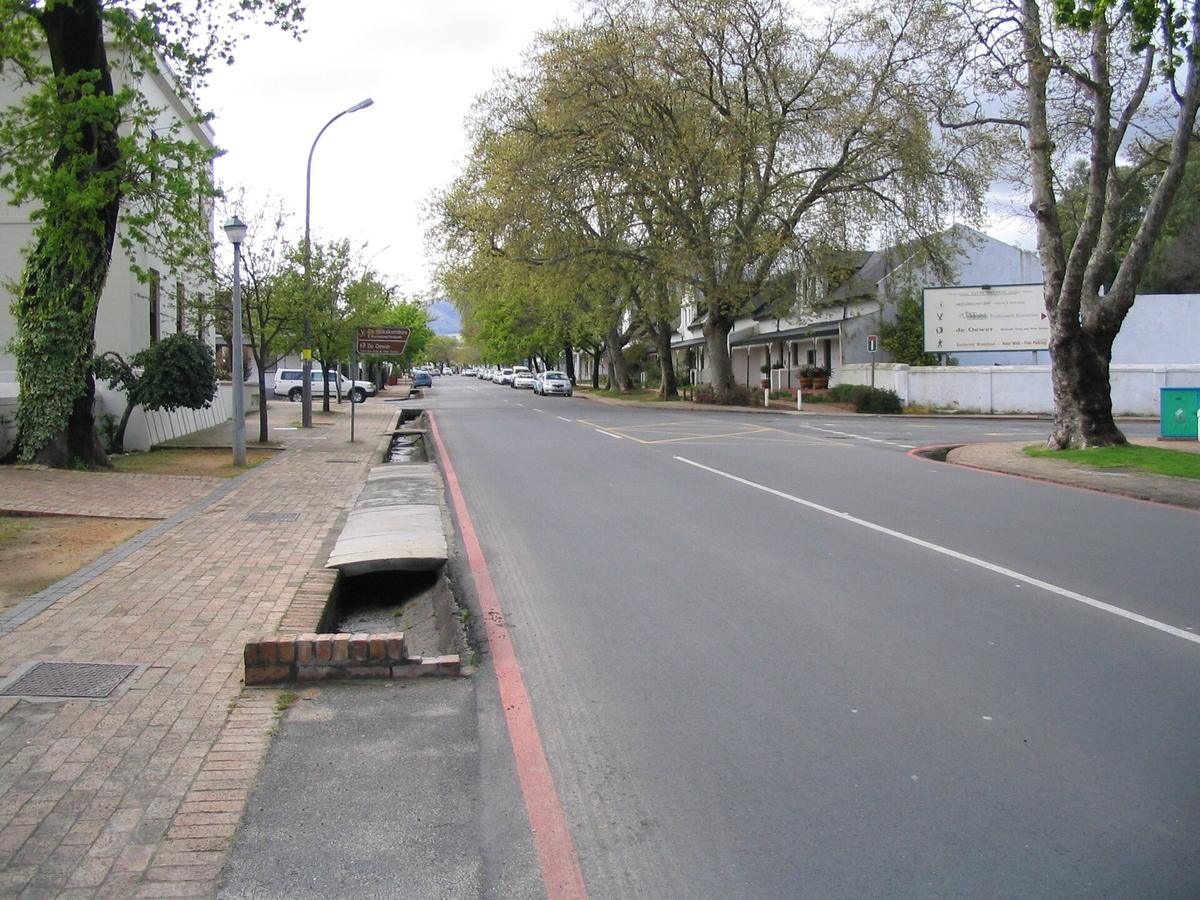

Start on Dorp Street at 08:30
Arrive early. Dorp Street, laid out in the 1680s and 1690s, runs roughly 1.2 km from terminus to terminus. At 08:30 on a weekday in term time, the street is quiet. The university, established in 1918 with a predecessor college dating to 1866, sits immediately east of the historic core within 1 km of Dorp Street. Its 32,000 students keep the town alive. By 09:00, coffee shops on Dorp Street fill with students and academics. By 10:00, the galleries and cellar doors open. You have the morning to yourself if you start earlier than the tour groups.
Walk west to east. The notable buildings are numbered. Oude Werf, the site of the first church from 1686, anchors one end. La Gratitude, a Cape Dutch house from 1798, sits further along. At 38 Dorp Street, the VOC seal building from 1785 shows the Dutch East India Company crest. Over 160 provincial heritage sites sit within the town limits. This is not a one street town. The conservation area extends into the blocks north and south of Dorp Street, where oak lined lanes hide small guesthouses and independent bookshops. Pause at the university art gallery on the main campus. It is free and it is quiet.
Why Empty in January Works
December and January are peak season across the Western Cape. In Stellenbosch, the student population drops by 60 to 70 percent during the December January break. That empties the streets. Short term rental availability rises. Restaurant weekday trade drops, but weekend tourism stays steady. Shift your trip to January after the Christmas New Year gridlock, or to February before university term starts, and you get the walkability without the peak price. Avoid the week between Christmas and New Year entirely. Coastal towns from Hermanus to Plettenberg Bay gridlock and prices triple. Stellenbosch is inland, but the roads from Cape Town International Airport clog. Arrive via the airport, 20 to 40 minutes by Uber for R200 to R350 depending on traffic. MyCiTi bus route A01 runs to the Civic Centre for roughly R110, but you need a pre loaded MyCiTi card for that route. An Uber is simpler.
Walking to Wine Estates is Real, Not Marketing
You cannot walk to all 150 farms. You do not need to. From the town centre, two clusters sit within walking distance. Lanzerac is roughly 2.5 km east, a 30 minute walk or a 5 minute Uber. The Coopmanhuijs and Blaauwklippen area sits about 3 km south. That is a 35 minute walk. A standard pour runs ZAR 60 to 150 per person for four to six wines. Premium single vineyard sessions run ZAR 150 to 350. By comparison, a typical pour in Franschhoek runs ZAR 80 to 200. Stellenbosch is not cheaper, but the gap narrows when you account for the ZAR 180 to 350 you save on a rental car for the day.
For the second group, cycling works. Spier sits roughly 8 km from town. Meerlust and Rust en Vrede sit around 10 km. Jordan is 9 km. De Zalze is 5 km. Rent a bicycle from a shop on the south side of the historic core. Do not trust Google Maps driving estimates on the secondary roads. It underestimates driving times on mountain passes and dirt roads by 30 to 50 percent. Cycling, you control the pace. The pours are light. You can hit two farms by foot and two more by bike in a single day without a car.
What It Costs to Stay
A mid range B&B or guesthouse in Stellenbosch runs ZAR 1,200 to 2,800 per night. In Franschhoek, the same category runs ZAR 1,800 to 3,500. The difference is not dramatic, but Stellenbosch gives you more options. You get the full town infrastructure: supermarkets, a proper pharmacy, multiple coffee roasters, and a bookshop that stocks hiking maps. Franschhoek gives you a higher density of cellar doors on a single road and the wine tram. Stellenbosch gives you a base that works for non wine days. Skip a pour and you can walk the university botanical garden, browse the art galleries on Dorp Street, or drive 30 minutes to the coast at False Bay. Franschhoek does not offer that. It is a gourmet village. Stellenbosch is a town.
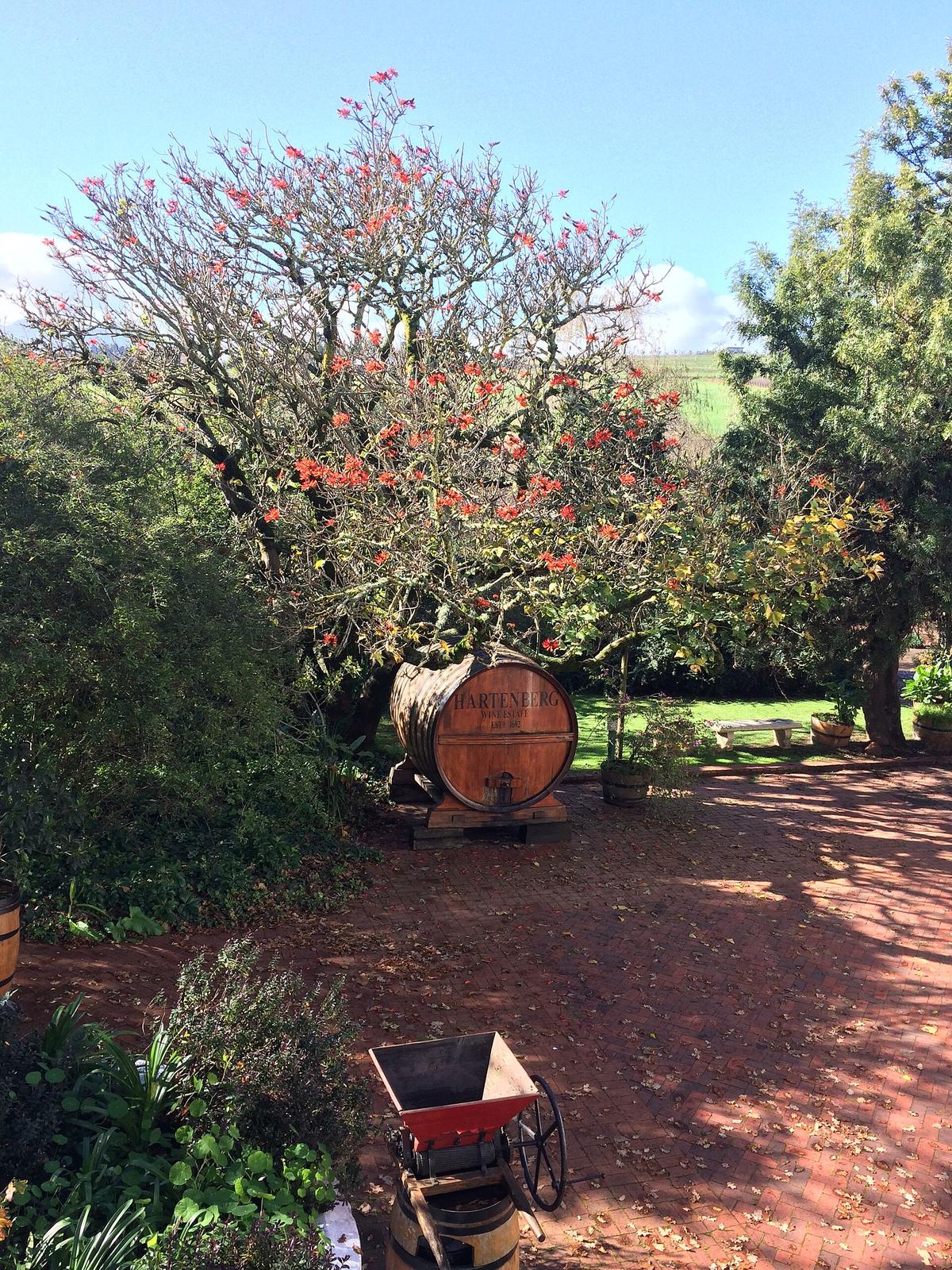

Walk the Wine, Skip the Late Night
The town has a student bar scene that peaks during term time. Outside term, from mid December to late January, some of those bars run reduced hours. The restaurant scene stays strong. Book key restaurants three to six months ahead in peak summer. But if you want late night music or a club past midnight, you need to be in Cape Town, 45 minutes away by car. That is the trade off. A walkable wine town does not have a club district. Accept that limitation and you will not be disappointed.
The single most practical thing to do before setting out: open Google Maps, download the offline map for the Stellenbosch region, and pin three farms within 3 km of Dorp Street. Book a guesthouse on a side street off Dorp, not on the main tourist drag. Arrive at the airport, take an Uber, walk to your first pour. Do not rent a car for that day. You will taste better, save money, and actually see the street.
Common Questions
How many wine estates are on the Stellenbosch wine route?
Approximately 150 member wine estates. The route was established in 1971.
Can I walk from Stellenbosch town centre to a wine estate?
Yes. Lanzerac is roughly 2.5 km east, a 30 minute walk. The Coopmanhuijs and Blaauwklippen area is about 3 km south, a 35 minute walk.
What is the typical tasting fee in Stellenbosch?
Standard tastings run ZAR 60 to 150 per person for four to six wines. Premium single vineyard tastings run ZAR 150 to 350 per person.
How far is Franschhoek from Stellenbosch?
30 km by road, via the R310 and R45.
When is the best time to visit Stellenbosch to avoid crowds?
January after the Christmas New Year rush, or February before university term starts. Student population drops by 60 to 70 percent in the December January break, easing accommodation pressure.
Is Stellenbosch cheaper than Franschhoek for accommodation?
Yes. Mid range B&Bs and guesthouses in Stellenbosch run ZAR 1,200 to 2,800 per night, compared to ZAR 1,800 to 3,500 in Franschhoek.
What is the one mistake to avoid when visiting Stellenbosch?
Renting a car for your first day. You can walk to the historic core and two nearby estates. Skip the car, save on parking and insurance, and taste without measuring pours.
Read next
-
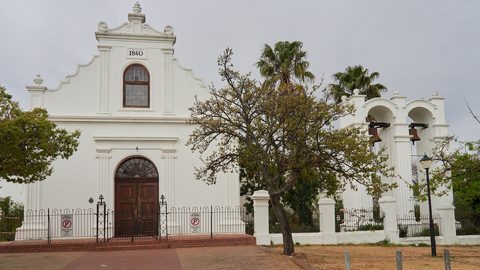 Stellenbosch Things to Do Wine Estates the Town and the University Quarter
Explore Stellenbosch beyond the wine estates with the university art scene, Dorp Street heritage buildings, Village Museum and Jonkershoek hiking trails.
Stellenbosch Things to Do Wine Estates the Town and the University Quarter
Explore Stellenbosch beyond the wine estates with the university art scene, Dorp Street heritage buildings, Village Museum and Jonkershoek hiking trails.
-
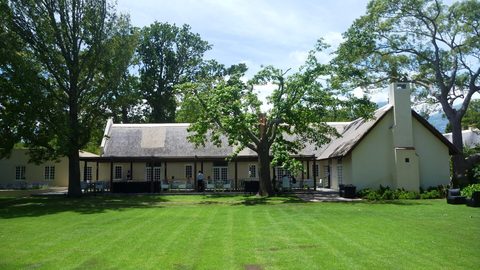 Eating in Stellenbosch Estate Restaurants and the Town's Best Tables
Compare Stellenbosch estate restaurant dining with in-town tables, from Jordan and Delaire Graff to Ryneveld Street cafes and the Oude Libertas market.
Eating in Stellenbosch Estate Restaurants and the Town's Best Tables
Compare Stellenbosch estate restaurant dining with in-town tables, from Jordan and Delaire Graff to Ryneveld Street cafes and the Oude Libertas market.
-
 South Africa Travel Guide, What to Know Before You Go
South Africa delivers raw landscapes and world-class wildlife, but requires more planning than a typical beach getaway. Here's how to start.
South Africa Travel Guide, What to Know Before You Go
South Africa delivers raw landscapes and world-class wildlife, but requires more planning than a typical beach getaway. Here's how to start.
-
 Cape Town vs Johannesburg Which City for Your Days
Which South African city to spend your limited days in, refereed without false neutrality.
Cape Town vs Johannesburg Which City for Your Days
Which South African city to spend your limited days in, refereed without false neutrality.
-
 Best Time to Visit South Africa by Region and Season
South Africa's seasons are inverted, and the Cape's winter rain is opposite the rest of the country. Here's how to time your trip.
Best Time to Visit South Africa by Region and Season
South Africa's seasons are inverted, and the Cape's winter rain is opposite the rest of the country. Here's how to time your trip.
-
 Getting Around South Africa, Why Self-Drive Beats Flying
Self-driving is the best way to see the Cape and Garden Route, but long distances and Gauteng's e-toll system can surprise first-time visitors.
Getting Around South Africa, Why Self-Drive Beats Flying
Self-driving is the best way to see the Cape and Garden Route, but long distances and Gauteng's e-toll system can surprise first-time visitors.