Cape Town Accommodation by Neighbourhood and Budget
Compare Cape Town neighbourhoods by budget and vibe, from the Atlantic Seaboard to the City Bowl and Southern Suburbs, with real nightly price ranges.
The Mountain Splits Cape Town Into Three Distinct Hotel Markets
Every guide tells you every Cape Town neighbourhood is great. That is not helpful. The mountain itself draws the line. Table Mountain splits the city into three accommodation clusters that behave like different cities: the Atlantic Seaboard, the City Bowl, and the Southern Suburbs. Each has a distinct wind pattern, a different price band, and a safety reality that does not match the perception. Your choice determines whether you spend peak season paying R8,000 a night for a Camps Bay hotel room with a sea view and a summer wind that pins your umbrella shut, or R2,200 a night for a City Bowl guesthouse where you walk to dinner on Bree Street and the mountain blocks the wind entirely.
The Atlantic Seaboard: Views, Wind, and a Premium Price Tag
Where To Stay Along The Strip
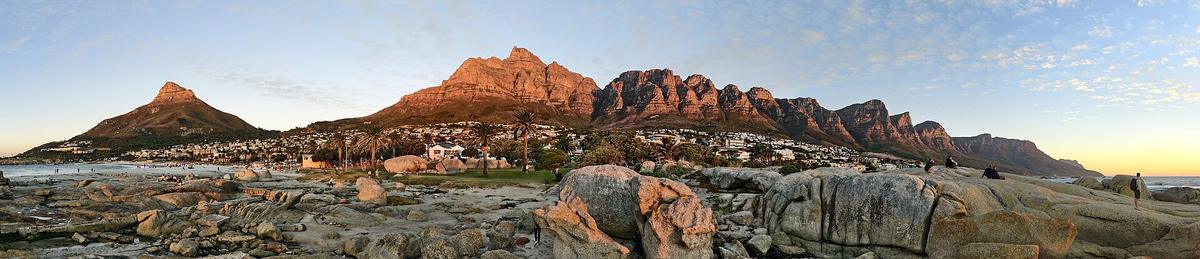
The Atlantic Seaboard runs from Sea Point north through Bantry Bay, Clifton, and Camps Bay. This is the postcard strip. The tradeoff is the summer south easter, which hits these slopes directly from November through February. Afternoons on Camps Bay beach mean sandblasting. The reward is the view: the ocean, the beachfront promenades, and direct sunsets.
Sea Point is the more practical end of this strip. The Main Road and the promenade are walkable at night, and the hotels sit in a livelier urban setting. A double room at the mid-range President Hotel or The Hyde All Suite Hotel runs R3,500 to R8,000 in peak season and drops to R1,800 to R4,000 in the low months. The upmarket Winchester Hotel charges at the top of that range. Self-catering two-bedroom apartments in Camps Bay cost R6,000 to R18,000 a night in peak season and R2,500 to R7,000 in the low months. The top-end options like 21 Nettleton and Clifton YOLO Spaces sit at the high end of that band.
Safety And Practical Realities
Do not walk on Clifton beaches or the access stairs after dark. The unlit link roads between Main Road and the mountain are also unsafe after 22:00. If you stay on the upper slopes of Camps Bay, water pressure can drop during high-demand periods because the municipal supply relies on booster pumps in that area. Properties without solar backup or an inverter lose lights, lifts, and Wi‑Fi during load shedding outages, which are scheduled annually.
Who this suits: travellers who want the beach within walking distance, who can afford the premium, and who will use ride-hail after dark. Who it does not suit: anyone on a budget, anyone who needs reliable afternoon wind-free conditions, or anyone who plans to walk home late from dinner.
,_Table_Mountain,_Blick_auf_City_Bowl_--_2024_--_2826.jpg)
The City Bowl: Walkable, Sheltered, and the Best Value Per Rand
The Neighbourhoods And The Prices
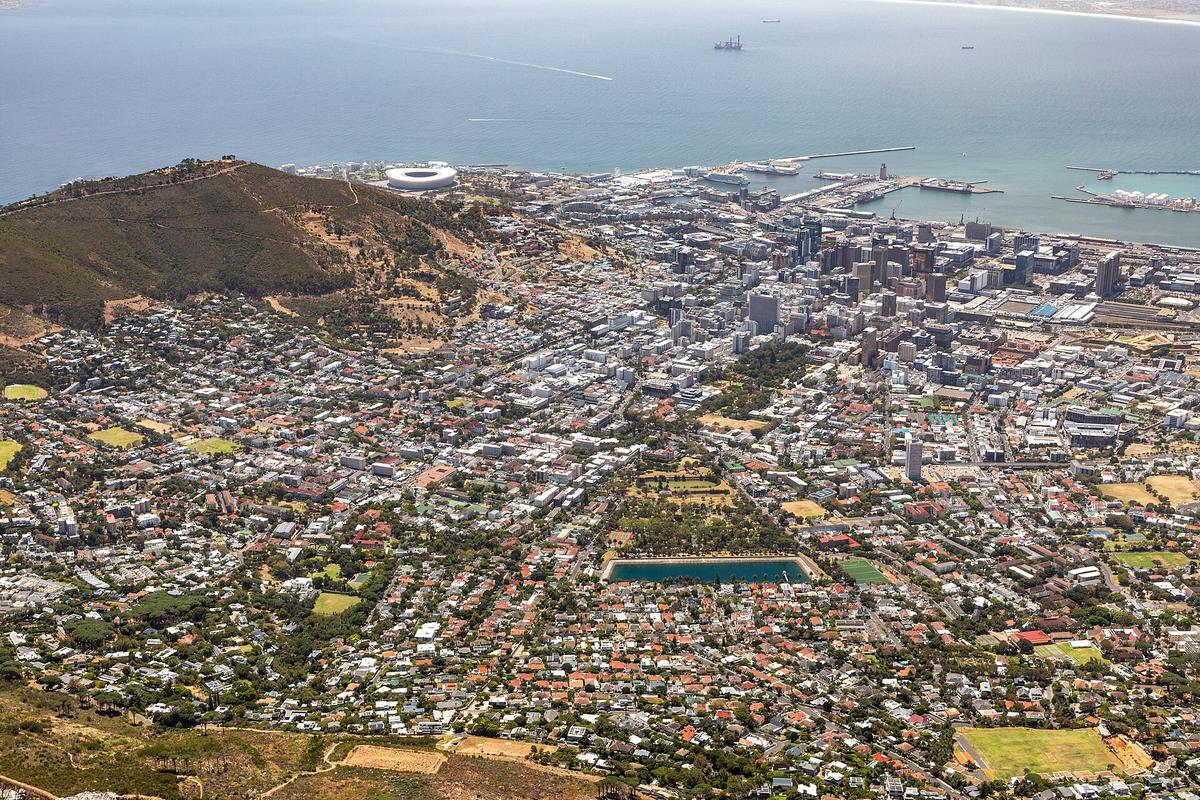
The City Bowl is the flat basin between Table Mountain and Signal Hill. It includes Bo-Kaap, De Waterkant, the V&A Waterfront, Tamboerskloof, Gardens, Oranjezicht, and the central business district. The mountain blocks the south easter, so summer evenings here are still. The restaurant density on Bree Street, Kloof Street, and parts of Harrington Street makes this the most walkable night out in the city.
Hotel double rooms in the upper bracket Mount Nelson, Cape Cadogan, and Labotessa Luxury Boutique Hotel cost R4,500 to R12,000 per night in peak season and R2,200 to R5,500 in the low months. The mid-range Derwent House, Cloud 9 Boutique Hotel and Spa, and La Grenadine Petit Hotel run R2,200 to R4,500 peak and R1,100 to R2,500 in the low season. Guesthouses like Jardin d'Ébène and Parker Cottage sit in that mid-range. Self-catering one-bedroom units at The Capital Mirage or 808 Cartwright in De Waterkant cost R1,800 to R3,500 peak and R900 to R1,800 in the low months.
The Waterfront Is Its Own Security Zone
The V&A Waterfront is technically inside the City Bowl but operates as a separate security zone. It is patrolled around the clock and walkable at night within the complex boundary. A double room at The Silo Hotel, Cape Grace, or One&Only Cape Town costs R8,000 to R18,000 in peak season and R4,500 to R8,500 in the low months. The mid-range Radisson Blu Hotel Waterfront and The Table Bay Hotel sit at the lower end of that range. Lawhill Luxury Apartments offer self-catering inside the security perimeter.
Where You Can Walk, And Where You Cannot
Safety perception versus reality: Long Street above Orange after midnight is not safe to walk. Lower Loop Street and most of the Foreshore are not safe after dark. De Waterkant side streets away from the main pedestrian routes should be avoided. But Bree Street, Kloof Street, Wale Street, and Buitenkant Street near Parliament have active foot traffic and restaurant frontages until late. The rule: walking after 22:00 outside these designated night-hub streets requires a ride-hail from Uber or Bolt, or a metered taxi from Excite Taxis or Rikkis.
Who this suits: travellers who want to eat well, walk to dinner, and keep the budget under control. Who it does not suit: travellers who need a sea view from the bedroom window or who want to spend the day on the beach without a drive.
The Southern Suburbs: Quiet, Green, and Distant from the Action
Space And Silence, At A Price Of Distance
The Southern Suburbs run from the eastern slope of Table Mountain through Newlands, Claremont, Harfield Village, and up into Constantia. This is wine-estate country and leafy residential streets. You do not walk to dinner here. The village hubs like Harfield Village Second Avenue and Claremont Main Road near Cavendish Square have evening foot traffic, but any residential street without active security patrol is not safe to walk after dark. Newlands Forest and the Kirstenbosch perimeter are unsafe after closing. Liesbeek Parkway footpaths are not safe at any hour.
A guesthouse double room at the mid-range Carmichael House in Claremont costs R1,800 to R3,500 in peak season and R1,000 to R2,000 in the low months. The upmarket Vineyard Hotel in Newlands and The Cellars-Hohenort in Constantia charge at the top of that band. Self-catering two-bedroom units run R2,000 to R4,500 peak and R1,200 to R2,500 in the low season. The Constantia wine-estate hotels Steenberg Hotel and Spa, The Alphen, and Nova Constantia cost R6,000 to R14,000 peak and R3,000 to R7,000 in the low months.
The tradeoff is distance. You drive to the City Bowl or the Atlantic Seaboard for restaurants and nightlife. The return is space, quiet, and garden views. The Southern Suburbs sit on the lee side of the mountain and do not get the summer wind. For a family who wants a self-catering house with a garden and a pool, this is the most affordable option in peak season.
Who this suits: families, wine drinkers, and anyone who wants a quiet base and does not mind driving to dinner. Who it does not suit: first-time visitors who want to walk to everything, solo travellers who want bar access, or anyone without a car.
| Area | Hotel Double Room Peak | Hotel Double Room Winter | Self-Catering Peak | Self-Catering Winter |
|---|---|---|---|---|
| City Bowl (upper bracket hotel) | R4,500 - R12,000 | R2,200 - R5,500 | R1,800 - R3,500 (1 bed) | R900 - R1,800 (1 bed) |
| City Bowl (guesthouse/B&B) | R2,200 - R4,500 | R1,100 - R2,500 | N/A | N/A |
| Atlantic Seaboard Camps Bay/Clifton hotel | R8,000 - R25,000 | R4,000 - R10,000 | R6,000 - R18,000 (2 bed) | R2,500 - R7,000 (2 bed) |
| Atlantic Seaboard Sea Point hotel | R3,500 - R8,000 | R1,800 - R4,000 | N/A | N/A |
| V&A Waterfront hotel | R8,000 - R18,000 | R4,500 - R8,500 | N/A | N/A |
| Southern Suburbs guesthouse | R1,800 - R3,500 | R1,000 - R2,000 | R2,000 - R4,500 (2 bed) | R1,200 - R2,500 (2 bed) |
| Constantia wine estate hotel | R6,000 - R14,000 | R3,000 - R7,000 | N/A | N/A |

Booking Reality: Deposits, Cancellation, and the Direct Booking Discount
Timing And The Seasonal Price Swing
Peak season runs approximately 15 December to 10 January. Many properties enforce a minimum stay of 7 to 14 nights. Book top villas and boutique hotels 6 to 12 months ahead. The low season runs May to September. Hotels and guesthouses discount 30 to 50 percent off peak rates. Self-catering discounts run 40 to 60 percent. Shoulder season from October to November and February to April takes 10 to 25 percent off peak.
Where To Book, And How To Get A Better Rate
Booking.com and Airbnb hold the majority of short-term inventory. LekkeSlaap.co.za carries significant Afrikaans-market and guesthouse inventory. A direct booking incentive exists: many guesthouses and small hotels knock 10 to 15 percent off or throw in a free airport transfer if you book on their own website. Ask for it.
The standard deposit is 50 percent at booking, with the balance due 30 to 60 days before arrival for high-season stays. Flexible cancellation policies allow free cancellation up to 7 to 14 days before arrival. Non-refundable rates give a 15 to 25 percent discount on the flexible rate. VAT on accommodation is 15 percent and a 1 percent tourism levy applies. Both are usually included in the quoted rate. Confirm before you pay.
Apartment Stays And Security Tiers
Full-service self-catering apartments with daily housekeeping and concierge are common in Cape Town and cost 30 to 50 percent less than equivalent hotel suites. If you want a kitchen and a separate bedroom without losing the service element, this is the structure to book. Standalone Airbnb apartments in residential blocks without a 24-hour front desk have the lowest security profile of any accommodation type. The V&A Waterfront hotels and residences have the highest: gated, round-the-clock patrols, and CCTV throughout.
Common Questions
Which side of Table Mountain has the best value accommodation in peak season?
The City Bowl. A guesthouse or B&B double room costs R2,200 to R4,500 per night in December, compared to R8,000 to R25,000 for a Camps Bay hotel. The wind is lower, the restaurants are walkable, and you are 10 minutes from the V&A Waterfront by ride-hail.
Is it safe to walk around Cape Town at night?
It depends entirely on the street. In the City Bowl, Bree Street, Kloof Street, and Wale Street are safe until late. Long Street above Orange after midnight is not. On the Atlantic Seaboard, Sea Point Main Road and the promenade are safe. Clifton beach stairs are not. The rule: walking after 22:00 outside designated night-hub streets requires a ride-hail or metered taxi.
How far ahead do I need to book for December?
Top villas and boutique hotels require booking 6 to 12 months in advance. Many properties enforce a minimum stay of 7 to 14 nights. Mid-range hotels and guesthouses may have availability 3 to 4 months ahead, but the best rooms go first.
What is the cheapest accommodation type in Cape Town?
Self-catering one-bedroom units in the City Bowl, which cost R1,800 to R3,500 per night in peak season. For a two-bedroom unit in the Southern Suburbs, the peak rate is R2,000 to R4,500. Both are cheaper than any hotel double room in the same areas.
Does the summer wind affect all of Cape Town?
No. The south easter hits the Atlantic Seaboard directly, especially Camps Bay and Clifton in the afternoon. The City Bowl is sheltered by the mountain. The Southern Suburbs are on the lee side and do not get the wind at all.
Should I book direct or use Booking.com or Airbnb?
Check Booking.com or LekkeSlaap for inventory, then contact the property directly. Many guesthouses and small hotels offer a 10 to 15 percent discount or a free airport transfer for direct bookings. The rate you see on the OTA is often the same as the flexible rate with the deposit and cancellation terms baked in.
What happens during load shedding?
Properties without solar backup or an inverter lose lights, lifts, and Wi‑Fi during scheduled power outages. This is an annual reality in South Africa. Check the amenity list for the words solar backup or inverter before you book, especially if you work remotely or need elevator access.
Read next
-
 Cape Town Things to Do From Table Mountain to the Cape Peninsula
Plan your Cape Town itinerary around the attractions that need advance booking, from Table Mountain cableway tickets to Robben Island ferries and Kirstenbosch concerts.
Cape Town Things to Do From Table Mountain to the Cape Peninsula
Plan your Cape Town itinerary around the attractions that need advance booking, from Table Mountain cableway tickets to Robben Island ferries and Kirstenbosch concerts.
-
 Getting Around Cape Town MyCiTi Bus Routes Rental Cars and the Safety Question
Compare Cape Town transport options including MyCiTi bus routes from the airport, rental car advice for the peninsula, and the Uber versus Bolt safety question.
Getting Around Cape Town MyCiTi Bus Routes Rental Cars and the Safety Question
Compare Cape Town transport options including MyCiTi bus routes from the airport, rental car advice for the peninsula, and the Uber versus Bolt safety question.
-
 Eating in Cape Town Where the Range and the Value Actually Are
Find the best value in Cape Town's restaurants, from Woodstock food markets and Bo-Kaap Cape Malay kitchens to Bree Street tasting menus.
Eating in Cape Town Where the Range and the Value Actually Are
Find the best value in Cape Town's restaurants, from Woodstock food markets and Bo-Kaap Cape Malay kitchens to Bree Street tasting menus.
-
 Day Trips From Cape Town the Winelands the Peninsula and Whale Season
Plan day trips from Cape Town to the Cape Peninsula, Stellenbosch winelands and Hermanus whales, with driving times and seasonal wildlife advice.
Day Trips From Cape Town the Winelands the Peninsula and Whale Season
Plan day trips from Cape Town to the Cape Peninsula, Stellenbosch winelands and Hermanus whales, with driving times and seasonal wildlife advice.
-
 South Africa Travel Guide, What to Know Before You Go
South Africa delivers raw landscapes and world-class wildlife, but requires more planning than a typical beach getaway. Here's how to start.
South Africa Travel Guide, What to Know Before You Go
South Africa delivers raw landscapes and world-class wildlife, but requires more planning than a typical beach getaway. Here's how to start.
-
 Cape Town vs Johannesburg Which City for Your Days
Which South African city to spend your limited days in, refereed without false neutrality.
Cape Town vs Johannesburg Which City for Your Days
Which South African city to spend your limited days in, refereed without false neutrality.
-
 Best Time to Visit South Africa by Region and Season
South Africa's seasons are inverted, and the Cape's winter rain is opposite the rest of the country. Here's how to time your trip.
Best Time to Visit South Africa by Region and Season
South Africa's seasons are inverted, and the Cape's winter rain is opposite the rest of the country. Here's how to time your trip.
-
 Getting Around South Africa, Why Self-Drive Beats Flying
Self-driving is the best way to see the Cape and Garden Route, but long distances and Gauteng's e-toll system can surprise first-time visitors.
Getting Around South Africa, Why Self-Drive Beats Flying
Self-driving is the best way to see the Cape and Garden Route, but long distances and Gauteng's e-toll system can surprise first-time visitors.
-
 A Two-Week Western Cape Itinerary for First-Time Africa Visitors
A practical 14-day Western Cape itinerary for first-time Africa visitors, covering Cape Town, the Winelands, and the Garden Route.
A Two-Week Western Cape Itinerary for First-Time Africa Visitors
A practical 14-day Western Cape itinerary for first-time Africa visitors, covering Cape Town, the Winelands, and the Garden Route.