Accessible Cape Town Step Free Sights Beaches and Transport
A practical guide to Accessible Cape Town Step Free Sights Beaches and Transport.


Arriving by Air
Cape Town International Airport is designed so that passengers with mobility restrictions can move through the terminal without encountering a single step. Dedicated lifts connect every level, and gentle-gradient ramps run alongside the travelators. Wheelchair-accessible routes lead to all shops, restaurants and viewing areas, so a delayed flight does not mean being stranded in a corner of the concourse.
Parking is concentrated in two multi-storey structures. Parkade P1 sets aside 14 bays per floor for drivers with disabilities, while Parkade P2 has its own designated bays. If you need a wheelchair from the terminal rather than from the aircraft, the Landside hotline is the direct line to the airport's own assistance team. For help that continues from check-in right onto the plane, the airline needs at least 48 hours' notice. The two services are separate, and the research confirms only that both exist; it does not describe how they hand over to each other. A cautious traveller would contact both the airport and the airline, leaving a clear paper trail.
Getting Around the City
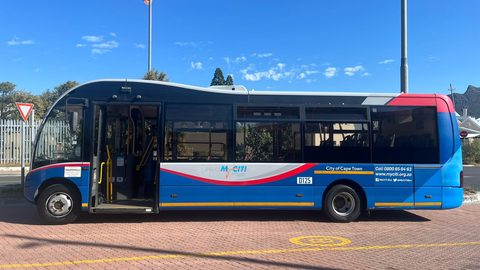
The MyCiTi bus network was built from scratch with universal access as a design rule, not an afterthought. Every bus pulls level with the station platform, so boarding is a flat glide across a bridging plate. Inside, dedicated wheelchair spaces mean you never have to fold a chair or transfer to a seat. At the stations, tactile paving guides passengers with visual impairments, induction loops at ticket kiosks carry sound directly to hearing aids, and wide access gates leave room to pass through without squeezing.
The system's ambition goes beyond the buses themselves. A 22.4 km network of accessible walking and cycling pathways feeds into the stations, which means some journeys can begin without a vehicle at all. In 2014 the Zero Project recognised the city's Universal Accessibility Policy as one of the most innovative in the world. That recognition is a useful signal, but it is a policy award, not a daily operations audit. Fares, routes and timetables change, and the official MyCiTi app is the only source that updates in real time. Before buying a myconnect card, check the current cost and load rules through the City of Cape Town's own channels.
Table Mountain Without Steps
The Aerial Cableway is the obvious way up, and the Lower Cable Station has lifts that carry wheelchair users to the departure level. Dedicated parking bays sit close to the entrance. Loan wheelchairs are available at the base, though stock is finite and you will need identification. At the Top Station, mobility scooters give visitors the freedom to explore without relying on a companion's stamina.
The summit experience changed significantly with the opening of a universal access walkway in April 2026. Built with SANParks, it connects key areas of the summit along a wheelchair-accessible route. The research does not specify which viewpoints or facilities the walkway reaches, so it is worth asking at the ticket office how far the route extends on the day you visit. Physically impaired visitors and their helpers pay half price, but the exact discount structure should be confirmed at the ticket office before joining the queue. Operating hours and ticket prices are not fixed; the cableway's own website is the place to check.
Beaches Built for Access
Muizenberg Beach is the city's flagship accessible shoreline, and the list of features is unusually long. Demarcated disabled parking sits close to the sand. Ramps and hand railings lead to accessible ablution facilities. A 50-metre Mobi-Mat lays a firm path across the soft beach, and during official lifeguard hours a free amphibious beach wheelchair is available directly from the lifeguards. That last detail matters: the service is tied to lifeguard shifts, not to a booking office.
Beach wheelchairs also exist at Fish Hoek, Big Bay and Camps Bay, but the model is different. These are not walk-up services. You must contact beach management in advance, and the research does not guarantee availability on any given day. The City of Cape Town's Coastal Coordination Unit is the responsible authority, and an email enquiry before you travel is the only way to know whether a chair will be waiting. Planned renovations along the Muizenberg beachfront may also affect access, so even the flagship beach deserves a status check.
The Waterfront and the Peninsula
The V&A Waterfront has taken a straightforward approach: wheelchair-friendly entrances, ramps beside every set of steps, disabled parking bays, accessible bathrooms and lifts throughout the precinct. It is a compact, flat district, and the main limitation is distance rather than obstacles.
Further down the peninsula, Cape Point rewards planning. The Flying Dutchman Funicular is wheelchair-accessible through a special gate, and it carries visitors most of the way up. The final climb to the lighthouse, however, is stairs only. There is no lift and no ramp for that last section. The Two Oceans Restaurant, Food Shop and lower-level shops are all wheelchair accessible, so a visit that stops at the funicular's top station still works. The funicular itself closes for maintenance periodically; a scheduled shutdown ran from late July through August 2026, and during those periods the lighthouse area is not wheelchair accessible at all. Check the Cape Point website for the current operating status before you drive out.
Kirstenbosch and the Garden’s Gradients
Kirstenbosch National Botanical Garden is honest about its geography. Every visitor facility, including entrance gates, restaurants, shops and venues, is wheelchair accessible. The garden itself, however, climbs the eastern slopes of Table Mountain, and the steep gradient means not all paths are navigable by wheelchair. The areas that are confirmed accessible include the Conservatory, Main Lawn, Fragrance Garden, Peninsula Garden and Sculpture Garden. These are clustered on the lower, flatter part of the estate.
A visitor who sticks to these named sections can have a full morning without encountering a barrier. Someone hoping to wander freely up into the arboretum or along the contour paths will hit slopes that the garden's own information flags as inaccessible. The choice is between a contained, guaranteed experience and an exploratory one that may require turning back. The garden's visitor information desk can give a current assessment of path conditions on the day.
Sources and verification
- airports.co.za — Research source checked for this guide
- airports.co.za — Research source checked for this guide
- airports.co.za — Research source checked for this guide
- myciti.org.za — Research source checked for this guide
- myciti.org.za — Research source checked for this guide
- tablemountain.net — Research source checked for this guide
Read next
-
 Where to Stay in Cape Town Choosing the Right Side of the Mountain
Compare Cape Town neighbourhoods by budget and vibe, from the Atlantic Seaboard to the City Bowl and Southern Suburbs, with real nightly price ranges.
-
 Cape Town Things to Do From Table Mountain to the Cape Peninsula
Plan your Cape Town itinerary around the attractions that need advance booking, from Table Mountain cableway tickets to Robben Island ferries and Kirstenbosch concerts.
-
 Getting Around Cape Town MyCiTi Bus Routes Rental Cars and the Safety Question
Compare Cape Town transport options including MyCiTi bus routes from the airport, rental car advice for the peninsula, and the Uber versus Bolt safety question.
-
 Eating in Cape Town Where the Range and the Value Actually Are
Find the best value in Cape Town's restaurants, from Woodstock food markets and Bo-Kaap Cape Malay kitchens to Bree Street tasting menus.
-
 Day Trips From Cape Town the Winelands the Peninsula and Whale Season
Plan day trips from Cape Town to the Cape Peninsula, Stellenbosch winelands and Hermanus whales, with driving times and seasonal wildlife advice.
-
 South Africa Travel Guide, What to Know Before You Go
South Africa delivers raw landscapes and world-class wildlife, but requires more planning than a typical beach getaway. Here's how to start.
-
 Cape Town vs Johannesburg Which City for Your Days
Which South African city to spend your limited days in, refereed without false neutrality.
-
 Best Time to Visit South Africa by Region and Season
South Africa's seasons are inverted, and the Cape's winter rain is opposite the rest of the country. Here's how to time your trip.
-
 Getting Around South Africa, Why Self-Drive Beats Flying
Self-driving is the best way to see the Cape and Garden Route, but long distances and Gauteng's e-toll system can surprise first-time visitors.