Is Cape Town Safe? The Honest Answer, Area by Area
Is Cape Town safe? The honest answer: serious crime is real but localised. Here is what tourists actually need to know, area by area.

Is Cape Town Safe for Tourists? Yes, with Clear Exceptions You Need to Know
Yes, Cape Town is safe for tourists who stay in the main visitor areas and follow basic precautions. The city received 2.6 million international arrivals in 2023. The vast majority left without incident. But you asked the question because you read the headlines, and the headlines are not wrong. Cape Town has a murder rate of 64 per 100,000. That statistic is real and it is localised. More than half of the city's homicides occur in just six police precincts: Khayelitsha, Nyanga, Delft, Mitchells Plain, Gugulethu, and Harare. These are residential townships far from the Cape Town city bowl, the Atlantic Seaboard, the V&A Waterfront, and the Winelands. You will not pass through them on any standard tourist route.
The crime that affects visitors is different. Lower in violence, higher in frequency: theft from rental cars, daypack snatching on hiking trails, opportunistic grabs in crowded spaces. Do not fear the city you cannot see. Manage the risks in the city you can.
The Real Crime Breakdown: Where Tourists Actually Get Into Trouble
Violent Crime In The Tourist Zones
Stick to the V&A Waterfront, Camps Bay, Sea Point, the City Bowl, and Kirstenbosch. Your odds of being a victim of violent crime are very low. The Camps Bay precinct recorded one murder in 2023/24 and 23 common robberies. Sea Point had three murders. The Central City Improvement District covers 1.6 square kilometres of the city centre with 300 public safety officers and 1,800 private security cameras, funded by a 60 million rand annual budget. The V&A Waterfront saw 12 security incidents per 100,000 visitors in 2023. Those are low numbers for a dense urban tourism zone.
Theft From Cars
The real problem is theft from cars. The Cape Town Central precinct, which covers the city centre and the lower slopes of Table Mountain, recorded 1,204 thefts out of motor vehicles in 2023/24. That is more than three incidents per day. Table Mountain National Park sees 30 to 60 car break ins per year. Signal Hill adds another 15 to 25. The pattern is simple. Thieves target rental cars with visible bags, backpacks, cameras, or phone mounts left on seats. They smash a window, grab the item, and are gone in seconds. This happens at trailheads, at scenic pull offs on Chapman's Peak Drive, and at parking lots near Boulders Beach.
The fix is equally simple. Leave nothing in the car. Open the glovebox. Open the centre console. Fold down the back seats so the interior is visible and empty. If you must store something, put it in the boot before you arrive at the parking spot, not after. Thieves watch people hide bags. Do not make that mistake.
Hiking Safety
Hiking carries its own risk profile. Table Mountain National Park sees 40 to 70 muggings per year, with 10 to 20 on Lion's Head. That sounds alarming until you consider the park received 4.2 million visitors in 2023. The per capita risk is low. The risk spikes at dawn and dusk, on less popular routes, and when hiking alone. Park management recommends a minimum group of four. Follow that. Start the Skeleton Gorge or India Venster routes by 08:00. Descend before 15:00 in winter and 17:00 in summer. Book the Table Mountain Aerial Cableway in advance. It carried 1.1 million passengers in 2023 with 8 security incidents per 100,000. The cableway is safe. The unguarded trail behind it, at the wrong hour, less so.
Load Shedding, Traffic Lights, and Uber: the Practical Risks You Will Actually Face
Load Shedding And Intersection Risks
Load shedding, the scheduled power cuts that hit Cape Town 329 days in 2023, is the most disruptive daily risk for tourists. When the power goes out, traffic lights go dark. Intersections become four way stops. Not everyone treats them that way. The City of Cape Town identifies 25 to 35 smash and grab hotspot intersections where thieves target cars stopped at non functioning lights. Know them by reputation rather than memorising a list: the N2 highway on ramps and off ramps in the Southern Suburbs, the intersections around Cape Town International Airport, and the major crossings on the M5 and the N1. The tactic mirrors the car break in risk. Keep your doors locked, windows up, valuables out of sight. If a traffic light is out, treat it as a stop sign. Leave a gap between you and the car ahead, and keep moving. Do not stop to give money or directions through your window. Wave and go.
Ride Shares And Minibus Taxis
Uber is the safest way to move around Cape Town after dark. It is widely available. Confirm the licence plate and the driver's name before you get in. Sit in the back. Share your trip status with someone at home. The real risk with Uber in Cape Town is not the driver, but the pickup location. Avoid calling an Uber from the curb of a dark, quiet street. Request the ride from inside a restaurant, a hotel lobby, or a well lit shop. Wait inside until the app says the car is one minute away. The V&A Waterfront, Long Street, and Kloof Street have dedicated ride share pickup zones. Use them.
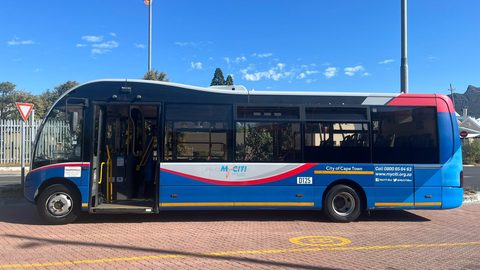
The meter taxi conflicts recorded each year involve disputes between drivers, not passengers. You can ignore that. What you cannot ignore is the minibus taxi industry. Cape Town recorded 80 to 120 minibus taxi related violent incidents per year between 2019 and 2023. Tourists are not the targets, but the violence is real and unpredictable. Do not use minibus taxis. They are not a tourist transport option. Take Uber, take the MyCiTi bus, or rent a car.
,_Waterfront,_Clock_Tower_--_2024_--_3014.jpg)
Read next
-

 Western Cape Hotels – From Vineyard Stays to Cliffside Guesthouses
Western Cape accommodation ranges from Winelands vineyard manors to clifftop guesthouses above the Whale Coast. Here is what your budget gets in each region.
Western Cape Hotels – From Vineyard Stays to Cliffside Guesthouses
Western Cape accommodation ranges from Winelands vineyard manors to clifftop guesthouses above the Whale Coast. Here is what your budget gets in each region.
-
 Where to Stay in the Western Cape – Which Town Matches Your Trip
Your choice of base town in the Western Cape shapes everything from driving times to wind exposure. Compare Cape Town, Stellenbosch, Hermanus, and Knysna side by side.
Where to Stay in the Western Cape – Which Town Matches Your Trip
Your choice of base town in the Western Cape shapes everything from driving times to wind exposure. Compare Cape Town, Stellenbosch, Hermanus, and Knysna side by side.
-
 Flying Into Cape Town International and When Johannesburg Works
Flying into Cape Town International, what the airport transfer options are, and when Johannesburg or George Airport is the smarter entry point.
Flying Into Cape Town International and When Johannesburg Works
Flying into Cape Town International, what the airport transfer options are, and when Johannesburg or George Airport is the smarter entry point.
-
 Things to Do in the Western Cape – Spending Limited Days Well
Not every Western Cape attraction earns its driving time. Here are the experiences that justify limited holiday days, from Table Mountain to the Knysna lagoon.
Things to Do in the Western Cape – Spending Limited Days Well
Not every Western Cape attraction earns its driving time. Here are the experiences that justify limited holiday days, from Table Mountain to the Knysna lagoon.
-
 Best Time to Visit the Western Cape – Wind, Whales and Honest Months
The Western Cape's best month depends on your tolerance for wind, whales, or wildflowers. Here is an honest month-by-month breakdown, including when to avoid the coast entirely.
Best Time to Visit the Western Cape – Wind, Whales and Honest Months
The Western Cape's best month depends on your tolerance for wind, whales, or wildflowers. Here is an honest month-by-month breakdown, including when to avoid the coast entirely.
-
 Getting Around the Western Cape – Airport Transfer and Why You Need a Car
Cape Town airport has a fast MyCiTi bus to the city, but beyond the City Bowl you will need a rental car. Here is why, and what Google Maps gets wrong about driving times.
Getting Around the Western Cape – Airport Transfer and Why You Need a Car
Cape Town airport has a fast MyCiTi bus to the city, but beyond the City Bowl you will need a rental car. Here is why, and what Google Maps gets wrong about driving times.
-
 Table Mountain
The Table Mountain cableway closes on wind, often for days in summer. Plan with a live forecast, flexible tickets, and a backup day.
Table Mountain
The Table Mountain cableway closes on wind, often for days in summer. Plan with a live forecast, flexible tickets, and a backup day.
-
 Robben Island
 ferry tickets sell out 2+ weeks ahead in peak season and still cancel for weather. Book early, keep the day flexible, know the refund policy.
Robben Island
Robben Island ferry tickets sell out 2+ weeks ahead in peak season and still cancel for weather. Book early, keep the day flexible, know the refund policy.
-
 Cape Point
 is not the southernmost tip of Africa—Cape Agulhas is. Here is what Cape Point actually offers and why it is still worth the drive.
Cape Point
Cape Point is not the southernmost tip of Africa—Cape Agulhas is. Here is what Cape Point actually offers and why it is still worth the drive.